English
 Español


Provide you with the latest enterprise and industry news.
Content
- 1 What Makes Embossed Polycarbonate Sheets Different
- 2 Core Technical Specifications
- 3 Anti-Static Treatment: Why It Matters in Real Applications
- 4 Primary Applications
- 5 Installation: The Overlapping Edge Advantage
- 6 Embossed vs. Corrugated vs. Hollow Sheet: Choosing the Right Type
- 7 What to Verify Before Ordering
Most buyers comparing light-diffusing roofing panels spend time weighing frosted glass against standard polycarbonate — and completely overlook embossed polycarbonate sheets, the option that often beats both. That oversight is costly. Embossed sheets deliver a unique dual-transmission effect, impact resistance far beyond glass, and a 10-year lifespan backed by UV-stable construction. This guide cuts straight to the specs, use cases, and selection criteria you actually need.
What Makes Embossed Polycarbonate Sheets Different
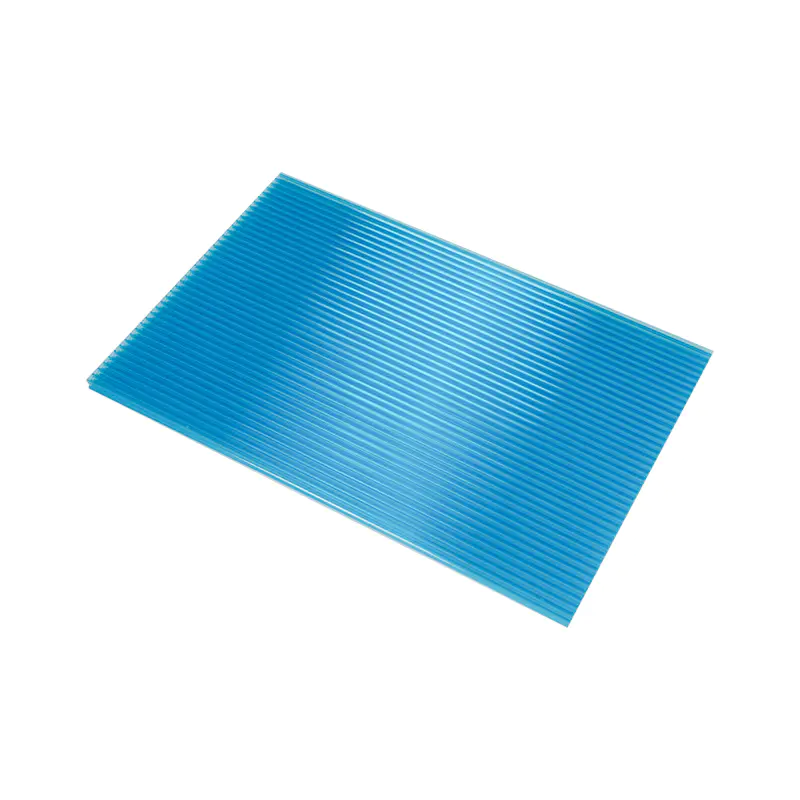
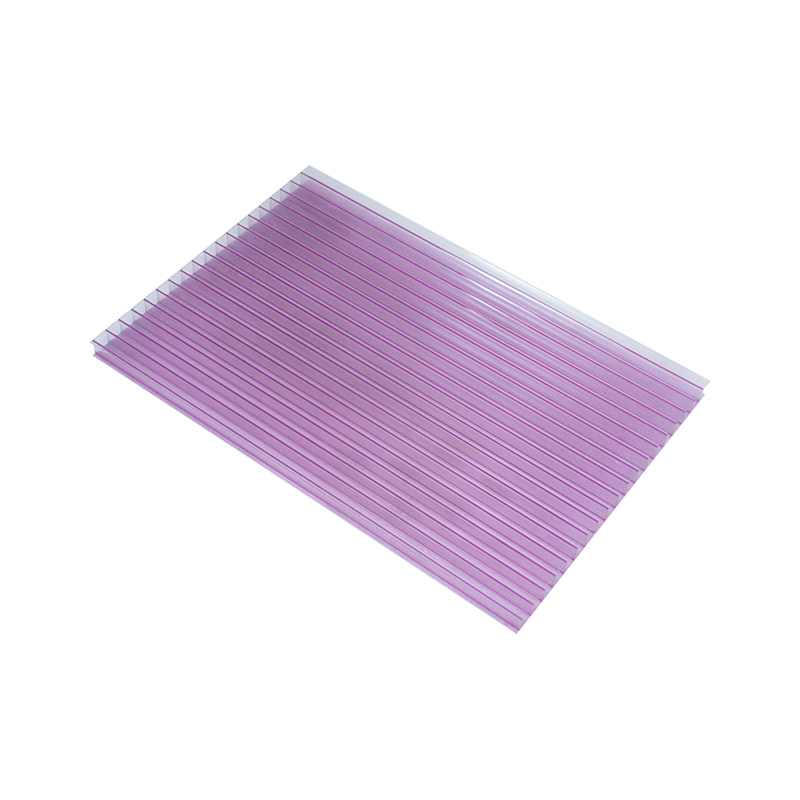
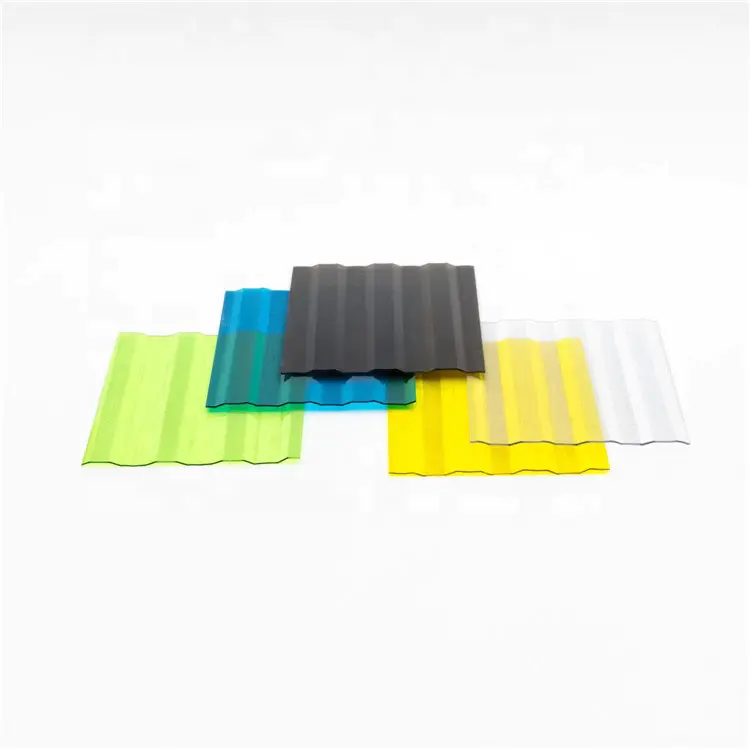
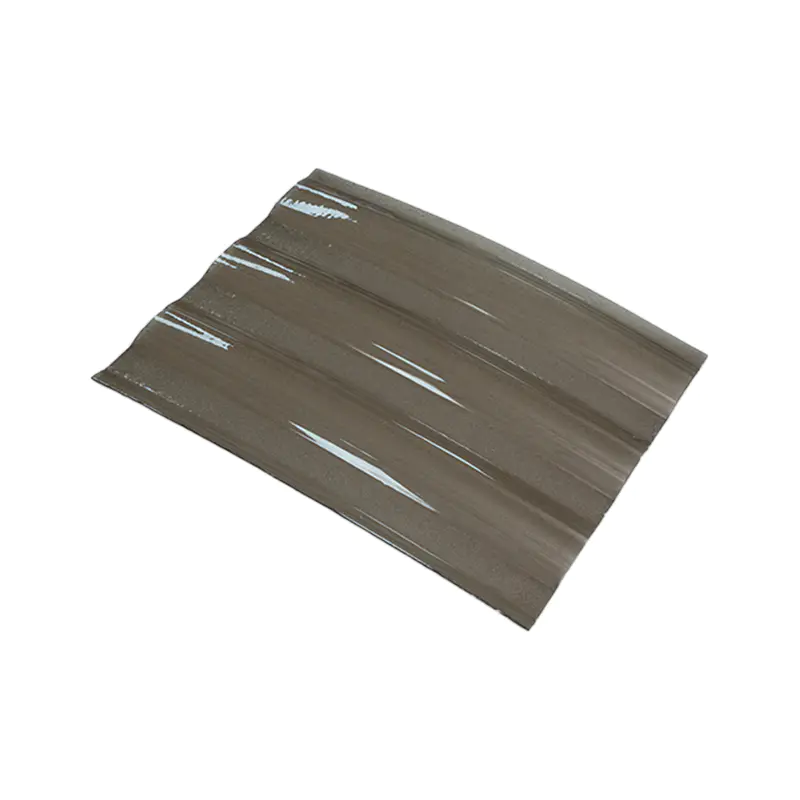
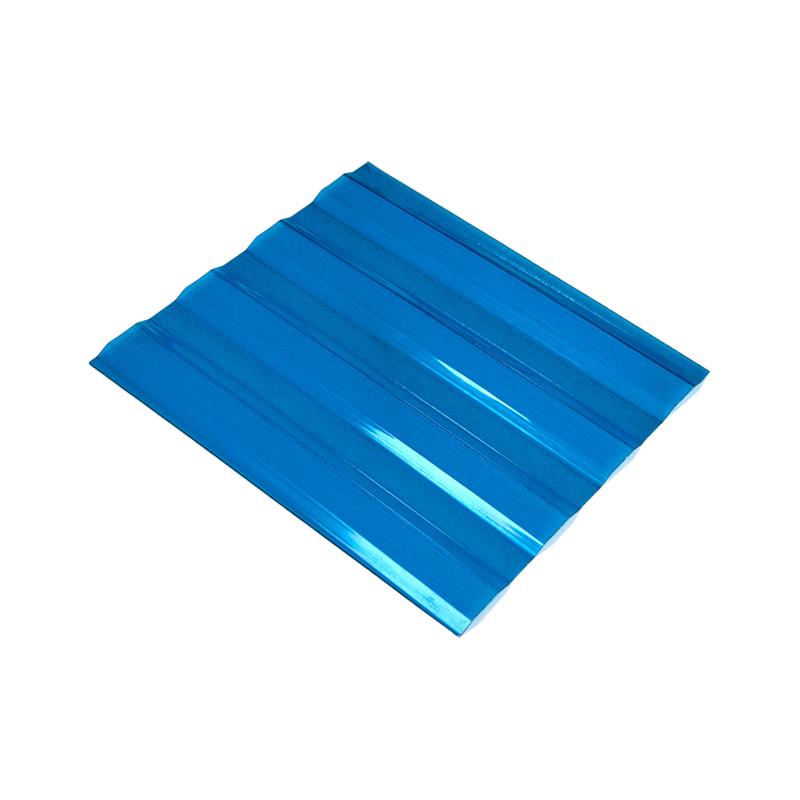
Unlike smooth or flat polycarbonate panels, embossed polycarbonate sheets feature reverse-static micro-textured patterns pressed into both surfaces at regular intervals, combined with a corrugated structure. The result is a sheet with two distinct lighting modes in a single panel.
During peak daylight hours, rays strike the embossed face directly — reducing light transmission to around 50%, which softens intense sunlight into comfortable, diffuse illumination. When light intensity drops and hits the smooth side at an oblique angle, transmission climbs back to 90%. The full day stays evenly lit without requiring blinds or secondary glazing. That dual-slit lighting behavior is patented and cannot be replicated by standard flat or frosted sheets.
The embossing also serves a structural function. Tiny peaks and valleys across the surface increase the panel's bending resistance, which is why a 1.2 mm embossed corrugated sheet achieves the same rigidity as a 3 mm solid flat sheet — with significantly less material weight and cost.
Core Technical Specifications
Understanding the data sheet is the fastest way to confirm whether a panel suits your project. The table below reflects published specs from UV-coated embossed corrugated polycarbonate sheet products:
| Property | Unit | Value |
|---|---|---|
| Light Transmission (embossed face) | % | 50 |
| Light Transmission (smooth face) | % | 90 |
| Impact Strength | J/m | 850 |
| Bending Strength | N/mm² | 100 |
| Tensile Strength | N/mm² | ≥60 |
| Operating Temperature Range | °C | −40 to +120 |
| Heat Deflection Temperature | °C | 140 |
| Specific Gravity | g/cm² | 1.2 |
| Modulus of Elasticity | MPa | 2400 |
| Thickness Range | mm | 1.2–3 |
One figure worth highlighting: an impact strength of 850 J/m puts polycarbonate roughly 200 times more resistant to shattering than conventional glass of equivalent thickness. For agricultural, industrial, or outdoor roofing applications, that margin matters enormously during hail events or accidental impacts.
Anti-Static Treatment: Why It Matters in Real Applications
A detail that distinguishes higher-grade embossed sheets from basic corrugated panels is the anti-static surface treatment. Standard PC sheets accumulate surface charge, attracting dust and fine debris — a real problem in greenhouse covers, workshop skylights, and any environment with airborne particulates.
The micro-embossed pattern on anti-static variants is engineered to dissipate electrostatic charge before it builds up, keeping the surface cleaner between wash cycles and maintaining consistent light transmission over time. For greenhouse growers, that difference in usable light compounds across an entire growing season.
You can explore the full range of embossed and corrugated polycarbonate sheet options to find anti-static, UV-coated, and multi-color variants suited to different load and climate conditions.
Primary Applications
The material's combination of structural rigidity, tunable light transmission, and weather resistance makes it practical across a wide range of projects:
- Greenhouses and agricultural shelters — Soft, diffuse light reduces leaf burn. Anti-static surfaces stay cleaner, and the −40°C to +120°C operating range handles seasonal extremes without warping or cracking.
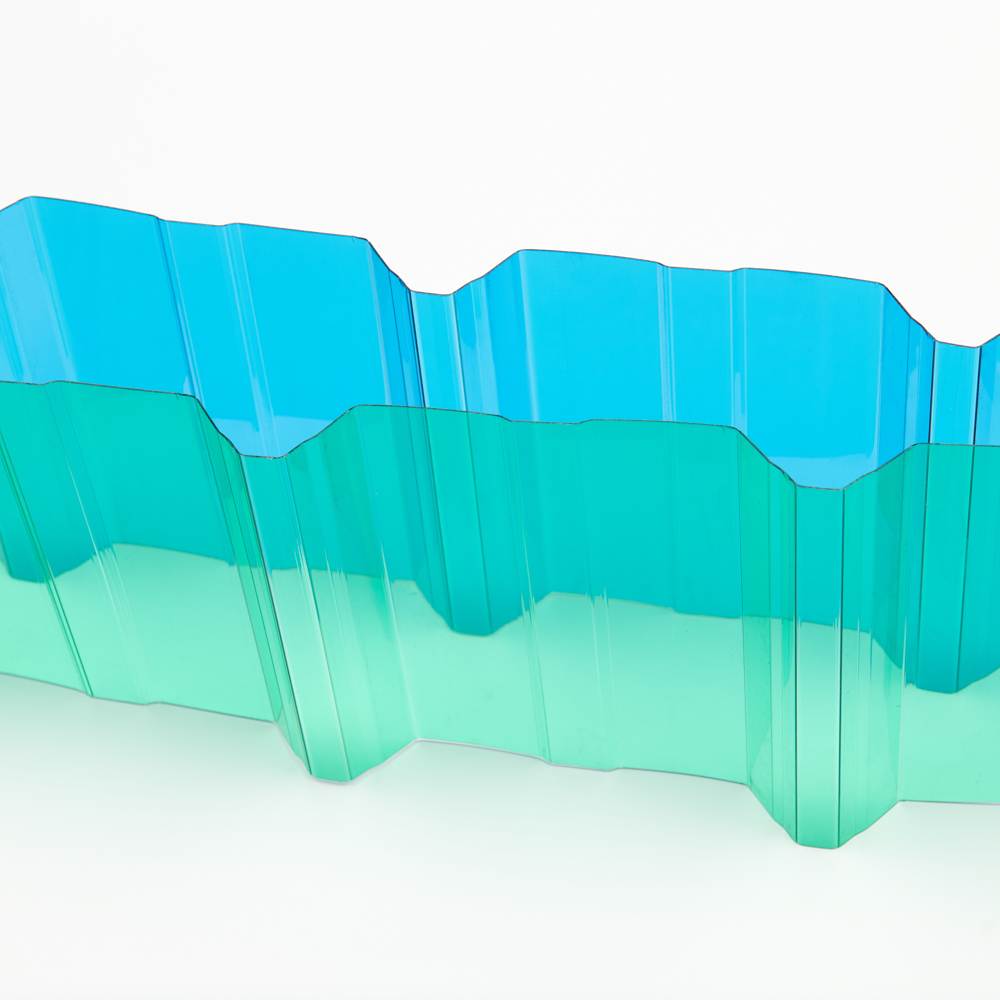
- Roofing for sheds, carports, and pergolas — Corrugated geometry sheds water effectively, while overlapping edges during installation prevent leakage at panel joints. Less framework is needed compared with heavier materials, which reduces structural costs.
- Industrial skylights and factory lighting — Where workers need consistent, glare-free light throughout the day, the automatic morning-to-evening transmission modulation removes the need for supplemental diffusers.
- Awnings and decorative canopies — Available in colors including clear, green, blue, orange, and bronze. Double-side UV coating protects color stability and prevents yellowing, which is the single most common failure mode of cheaper plastic roofing.
- Partition walls and signage — The textured surface creates interesting visual depth that flat panels lack, and the material accepts standard cutting and bending processes.
If your project requires processed or custom-fabricated pieces — bent profiles, die-cut shapes, or pre-assembled panels — custom-processed polycarbonate fabrication services can handle bending, thermoforming, and precision cutting from the same base material.
Installation: The Overlapping Edge Advantage
One structural feature that distinguishes embossed corrugated sheets from hollow twinwall panels is the overlapping edge design. Unlike flat-edge hollow sheets that require H-profile connectors to seal joints, embossed corrugated sheets are shaped so adjacent panels lap over each other during installation — eliminating a common source of water ingress without additional hardware cost.
Practical installation checklist:
- Measure and mark the support structure before cutting panels.
- Cut with a fine-toothed saw or scoring knife to avoid cracking the embossed surface.
- Lay panels with the UV-coated face upward (marked side toward the sun).
- Overlap edges by at least one corrugation width and secure with appropriate fasteners at regular intervals.
- Apply sealant at end caps to block moisture and insects from entering corrugation channels.
Standard sheet sizes run up to 50,000 mm × 1,220 mm with custom dimensions available. Thickness options from 1.2 mm to 3 mm allow specifiers to trade off between weight, rigidity, and cost according to span and load requirements. Minimum order quantity is 100 m², with typical delivery around 5–7 days after deposit confirmation.
Embossed vs. Corrugated vs. Hollow Sheet: Choosing the Right Type
Buyers sometimes conflate these three product categories. Here is a direct comparison to clarify:
| Type | Light Transmission | Thermal Insulation | Best For |
|---|---|---|---|
| Embossed Corrugated | 50–90% (variable) | Moderate | Greenhouses, sheds, diffused roofing |
| Standard Corrugated | Up to 88% | Low | Utility roofing, cost-sensitive projects |
| Hollow (Twinwall/Multiwall) | 70–82% | High | Skylights, climate-controlled enclosures |
Choose embossed corrugated when light quality (soft, non-glaring illumination) is a higher priority than thermal insulation. If you need both — for example, a four-season greenhouse — a multiwall hollow sheet will retain more heat, though it lacks the self-modulating transmission behavior of the embossed surface.
What to Verify Before Ordering
Four questions worth confirming with any supplier before placing a bulk order:
- UV coating side — Confirm whether UV protection is single-side or double-side. Double-side UV coating adds years of color and clarity retention in high-UV climates.
- Warranty period — Quality manufacturers offer 10-year guarantees against yellowing and structural degradation. Shorter warranties are a signal of inferior raw material or coating.
- Anti-static specification — Not all embossed sheets carry anti-static treatment. If your application is dust-sensitive, specify this explicitly.
- Fire rating — Agricultural and commercial construction projects in many jurisdictions require a minimum fire classification. High fire-rating variants are available in the embossed corrugated range and should be specified by project type.