English
 Español


Provide you with the latest enterprise and industry news.
Content
- 1 Understanding the Core Characteristics of Extruded Acrylic
- 2 Primary Scenario #1: Cost-Conscious Projects Without Extreme Stress Demands
- 3 Primary Scenario #2: Projects Requiring Complex Thermoforming
- 4 Primary Scenario #3: High-Volume Fabrication with Tight Tolerances
- 5 Primary Scenario #4: Applications Demanding Exceptional Flatness
- 6 When to Reconsider Extruded Acrylic
- 7 Making the Decision: A Practical Checklist
- 8 Conclusion: A Material of Strategic Advantage
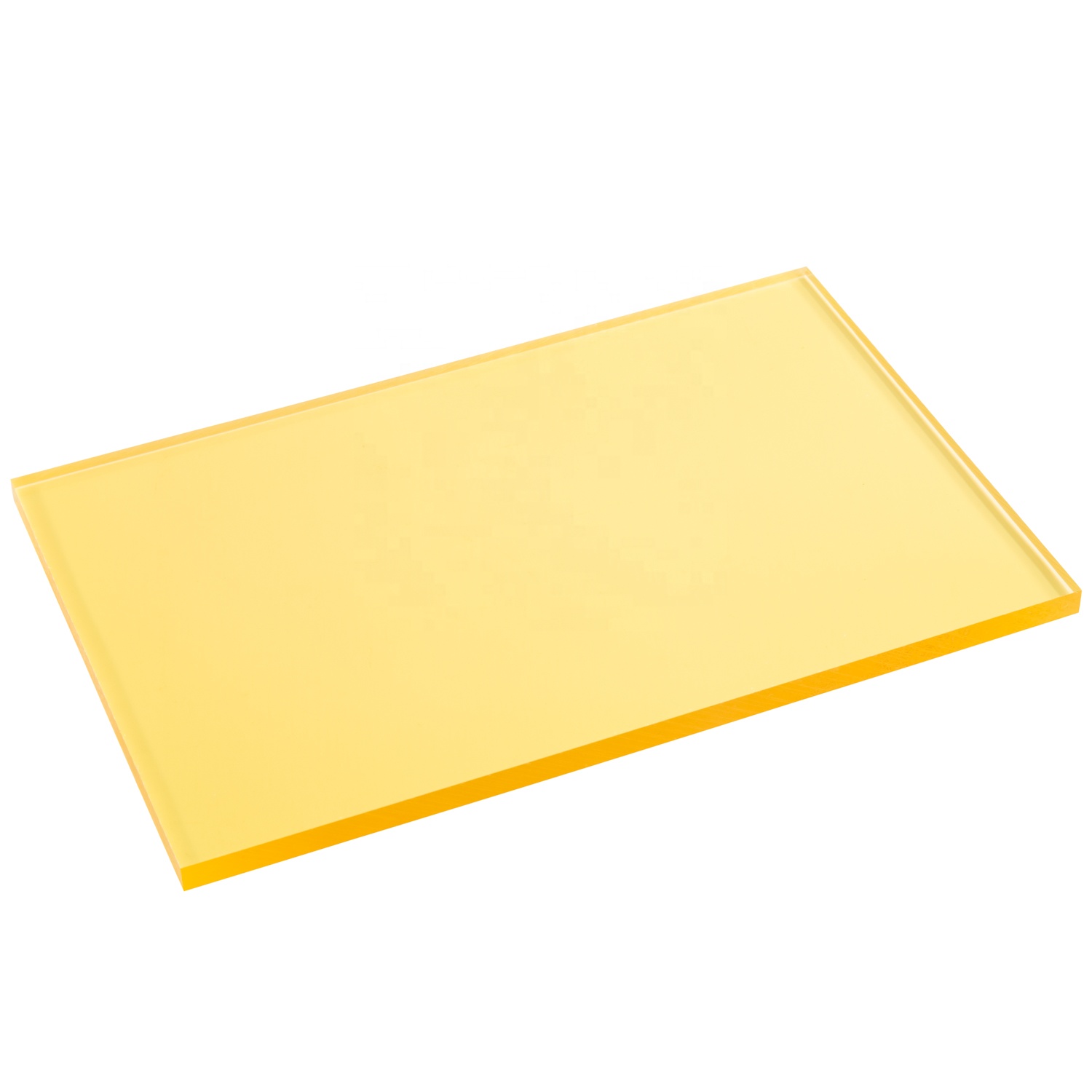
When specifying materials for a project involving clear plastic sheets, the choice between cast and extruded acrylic often arises. While both share the fundamental benefits of acrylic—clarity, weatherability, and formability—the manufacturing process creates distinct differences that make each suitable for specific applications. Extruded acrylic sheet, produced by melting acrylic pellets and forcing the resin through a die to form a continuous sheet, offers a unique set of characteristics.
Understanding the Core Characteristics of Extruded Acrylic
To make an informed choice, one must first understand what extruded acrylic is and what it inherently offers. The extrusion process involves heating acrylic polymer to a pliable state and forming it into a sheet of uniform thickness through a precisely machined die. This continuous, high-volume manufacturing method results in several key traits:
- Excellent Dimensional Consistency: The process yields sheets with very uniform thickness across their entire length and width, crucial for precision fabrication.
- Superior Flatness: Extruded sheets generally exhibit less internal stress and better overall flatness compared to some cast sheets, which can have a slight “bow.”
- Cost-Effectiveness: As a continuous, automated process, extrusion is typically less expensive per square foot, making it a budget-friendly option.
- Thermoformability: The molecular structure from extrusion allows it to soften evenly and consistently, making it highly predictable for heat bending and forming.
These inherent properties are not “better” or “worse” than those of cast acrylic; they are simply different. The choice, therefore, hinges on aligning these properties with your project’s specific requirements.
Primary Scenario #1: Cost-Conscious Projects Without Extreme Stress Demands
For many applications, the primary advantage of extruded acrylic is its economic efficiency. If your project involves large surface areas, multiple units, or operates within a tight budget—and does not require the ultimate in chemical resistance or load-bearing thickness—extruded acrylic is an excellent starting point.
Examples include:
- Basic protective barriers: Sneeze guards, countertop shields, and light-duty machine guards where optical clarity and cost are more critical than extreme impact resistance.
- Interior signage and displays: Backlit signs, menu boards, and retail display risers where the sheet is supported around its perimeter and not subject to point loads or harsh chemicals.
- Secondary glazing: As an affordable, lightweight insulation layer for windows, extruded acrylic provides good clarity and thermal benefits without the high cost of cast.
In these uses, the slightly lower impact strength (compared to cell cast of the same thickness) is often a perfectly acceptable trade-off for significant material cost savings. It’s crucial, however, to specify an adequate thickness to ensure structural integrity for the intended use.
Primary Scenario #2: Projects Requiring Complex Thermoforming
This is one of extruded acrylic’s strongest suits. Its consistent molecular weight and uniform heating characteristics make it the preferred choice for deep-draw or complex thermoforming applications. The material softens evenly, allowing it to stretch and form into detailed molds without the risk of thinning inconsistently or developing “hot spots” that can lead to clouding or bubbles.
Key applications include:
- Bubble skylights and domes: Forming deep, uniform curves.
- Contoured aircraft or marine windows: Where precise, repeatable forming is mandatory.
- Custom lighting diffusers and shades: For seamless, smooth shapes.
- Tub and spa covers: Large, formed sections.
For fabricators, extruded acrylic can mean faster cycle times, fewer rejects, and more predictable results in the forming oven. If your design involves significant three-dimensional shaping, extruded acrylic should be your first material to evaluate.
Primary Scenario #3: High-Volume Fabrication with Tight Tolerances
The dimensional consistency of extruded acrylic shines in mechanized, high-volume fabrication environments. Its uniform thickness and predictable behavior under tooling reduce setup adjustments and improve machining efficiency.
Ideal use cases include:
- CNC machining and routing: The sheet machines cleanly with less chipping on edges, and uniform thickness ensures consistent cutter engagement.
- Laser cutting and engraving: Extruded acrylic typically produces a pristine, flame-polished edge when laser cut and offers consistent engraving depth. It is often the default choice for laser applications.
- Precision die-cutting: For creating large quantities of identical parts like lenses, nameplates, or light guides.
For a shop producing hundreds of identical display components or cut letters, the reduced waste and reliable processing of extruded acrylic translate directly into time savings and lower production costs per piece.
Primary Scenario #4: Applications Demanding Exceptional Flatness
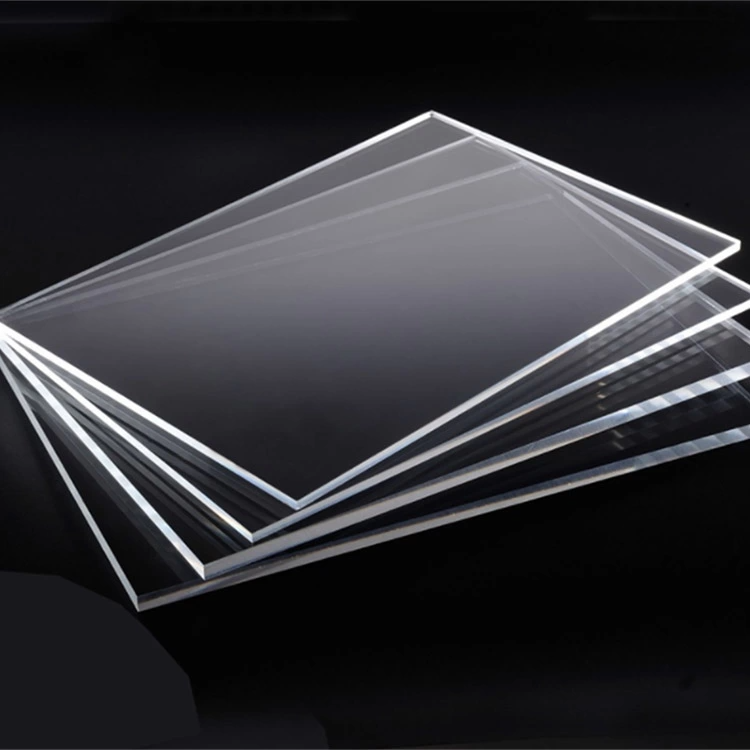
While cast acrylic can be very flat, extruded acrylic often has an edge (pun intended) in applications where minimal optical distortion or perfect adhesion over a large area is paramount. Its low internal stress and manufacturing process result in sheets that lie perfectly flat. This is critical for:
- Machine windows and inspection plates: Where viewing a process or part requires no visual distortion.
- Laminations and composite constructions: When bonding to another flat substrate (like a graphic or a polycarbonate sheet for bullet resistance), uniform contact is essential.
- Large-format framing and glazing: For covering artwork or documents in oversized frames, preventing any “oil-canning” or waviness that can distort the view.
When to Reconsider Extruded Acrylic
An objective guide must also outline the limitations. There are clear scenarios where cell cast acrylic is likely the superior choice, and recognizing them is key to avoiding project failure.
- Chemical Exposure: Extruded acrylic has lower resistance to harsh solvents (like ketones and some alcohols), paints, and unknown chemicals. For laboratory splash guards, chemical fume hoods, or parts in contact with aggressive substances, cast acrylic is mandatory.
- Extreme Physical Loads and Thickness: For applications requiring very thick sheets (commonly over 1 inch) or those subject to intense point loads or constant high stress, the superior load-bearing capacity and service life of cast acrylic make it worth the investment.
- Fabrication Involving Extensive Solvent Welding: While extruded acrylic can be cemented, cast acrylic is famously easier to solvent weld for invisible, structural bonds (e.g., in aquarium manufacturing).
- Maximum Weathering Performance for Decades: For applications like large architectural skylights or monumental signage where the absolute longest lifespan and guaranteed resistance to yellowing are required, the superior weatherability of high-grade cell cast acrylic may justify its premium.
Making the Decision: A Practical Checklist
Ask these questions to guide your specification:
- What is the budget? If it’s tight and the application is not extreme, start with extruded.
- Will it be thermoformed? If yes, lean strongly towards extruded.
- How will it be fabricated? For laser cutting, CNC routing, or high-volume die-cutting, extruded is often optimal.
- What is the primary threat? Is it impact (both are good), cost (extruded wins), or harsh chemicals (cast wins)?
- What level of optical perfection is needed? For minimal distortion and perfect flatness, extruded has a key advantage.
- What is the required thickness? For material over 1" thick, you will likely be forced into cast, which is readily available in heavy stock.
Conclusion: A Material of Strategic Advantage
Choosing extruded acrylic sheet is not about settling for a “lesser” material; it is about strategically selecting a product whose properties are engineered for efficiency, consistency, and formability. Its advantages in cost, thermoforming performance, flatness, and suitability for automated fabrication make it the intelligent, practical choice for a vast range of commercial, retail, signage, and interior design applications. By honestly assessing the demands of your project against the clear profile of extruded acrylic, you can confidently specify a material that will perform admirably, fabricate efficiently, and remain kind to your budget—the hallmark of a well-informed and effective design or procurement decision.