English
 Español


Provide you with the latest enterprise and industry news.
Content
Polycarbonate hollow sheets provide a definitive answer for projects requiring lightweight durability, thermal efficiency, and long-term clarity. As a multi-wall structured panel, they outperform glass and acrylic in impact resistance while reducing energy costs, making them the material of choice for greenhouses, skylights, and industrial enclosures worldwide.
Structural Design and Thermal Performance
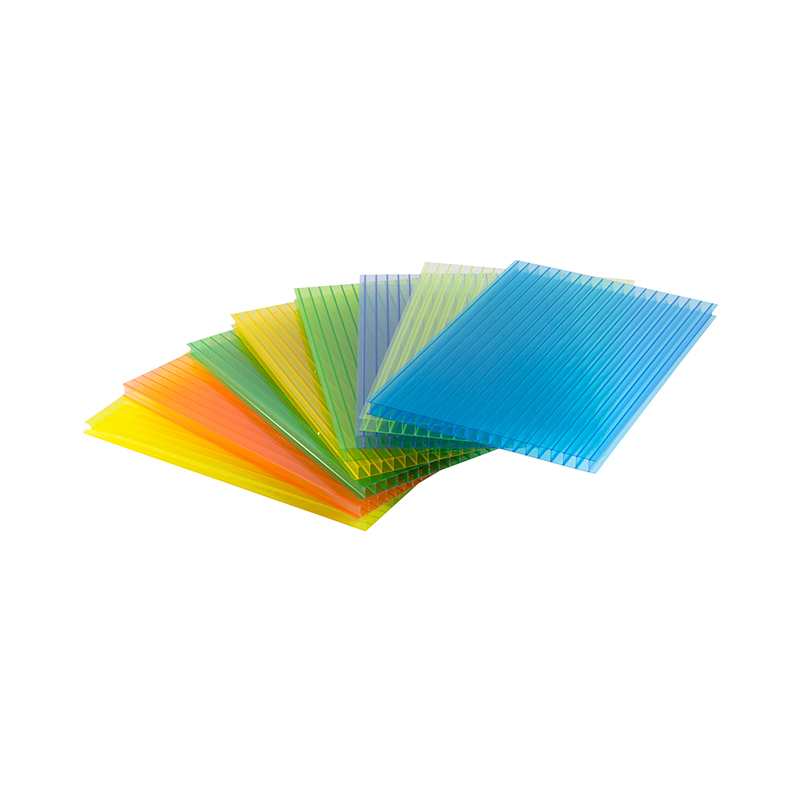
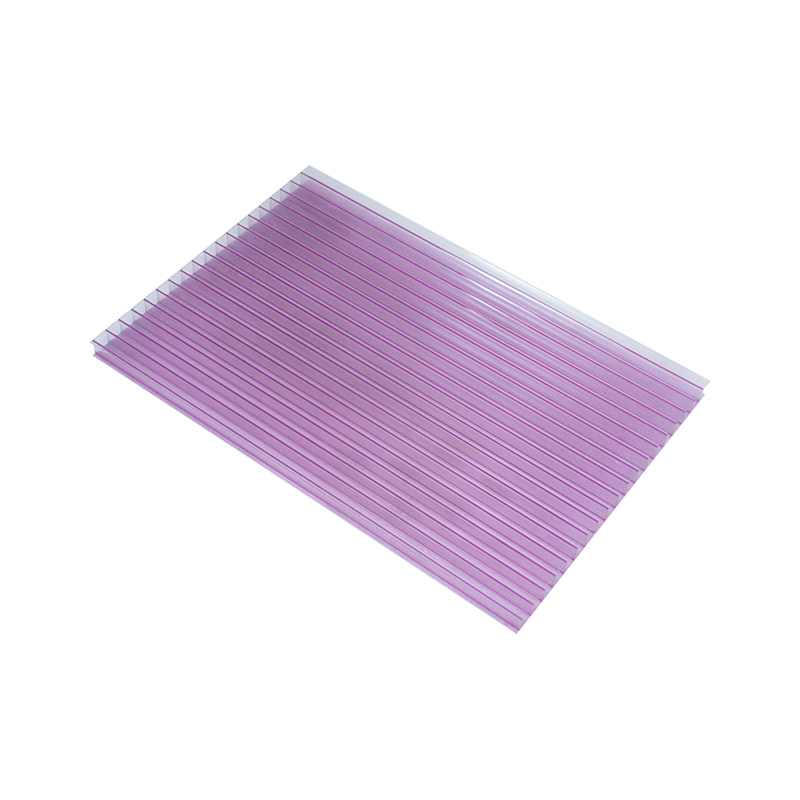
The defining feature of polycarbonate hollow sheets is their multi-wall construction. Vertical ribs connect parallel faces, creating an insulating air space that dramatically reduces heat transfer. This geometry yields a U-value as low as 1.6 W/m²K in thicker multi-layer panels, comparable to double-pane insulating glass but at a fraction of the weight. For a standard 10 mm twin-wall sheet, the U-value is approximately 3.0 W/m²K, significantly better than monolithic glass. The following list shows typical thermal performance by thickness:
- 6 mm twin-wall: U-value 3.6 W/m²K
- 8 mm twin-wall: U-value 3.3 W/m²K
- 10 mm twin-wall: U-value 3.0 W/m²K
- 16 mm triple-wall: U-value 2.4 W/m²K
- 20 mm four-wall: U-value 1.8 W/m²K
These values can be further improved by selecting tinted or IR-reflective grades that cut solar heat gain without sacrificing visible light transmission. The result is a material that directly lowers heating and cooling loads, contributing to energy savings of up to 40% in greenhouses compared to single-pane glass.
Impact Strength and Safety
Polycarbonate is virtually unbreakable. A solid sheet is 250 times stronger than glass and 30 times stronger than acrylic of the same thickness. In hollow sheet form, the ribbed structure adds stiffness while retaining incredible impact resistance. Unlike glass, which shatters into dangerous shards, polycarbonate cracks or deforms but stays intact. This property makes it mandatory in applications where human safety is critical, such as skylights, machine guards, and riot shields. Even under heavy hail or flying debris, the sheet maintains its protective function. Independent tests show that a 10 mm twin-wall panel can withstand the impact of a 4.5 kg steel ball dropped from 2 meters without puncture.
UV Protection and Weatherability
Unprotected polycarbonate yellows and becomes brittle under prolonged sun exposure. To prevent this, high-quality hollow sheets are co-extruded with a thin, integral UV-blocking layer on one or both sides. This cap layer filters out up to 98% of harmful UV radiation while letting visible light pass through. The technology ensures that the sheet retains its optical clarity and mechanical properties for over a decade. Accelerated weathering tests per ISO 4892 simulate years of outdoor exposure, confirming that treated panels keep a yellowness index below Delta YI 4 after 5000 hours. Many manufacturers back this with a 10-year limited warranty against discoloration and loss of impact strength.
Key Application Areas
The balance of properties opens polycarbonate hollow sheets to a wide range of demanding environments. Common uses include:
- Greenhouse glazing: diffused light transmission over 80% and controlled heat loss promote plant growth while cutting heating costs by up to 40%.
- Architectural skylights and canopies: daylighting with high strength and UV protection.
- Noise barrier walls: mass-spring effect of twin-wall panels provides sound reduction of up to 25 dB.
- Industrial machine guards and enclosures: transparent impact protection without weight penalty.
- Pool covers and patio roofing: weather resistance and thermal retention extend the swimming season.
- Cold storage doors and partitions: low-temperature toughness down to -40 degrees Celsius.
Installation Best Practices
Correct installation directly influences the service life of polycarbonate hollow sheets. Two critical factors are expansion allowance and moisture sealing.
Orientation and Overlapping
Sheets must be installed with the UV-protected side facing outward. Vertical ribs should run in the direction of the slope to allow condensation drainage. Overlap joints require a minimum of 100 mm for side laps and 200 mm for end laps on low-pitch roofs to prevent water ingress.
Thermal Expansion Allowance
Polycarbonate expands and contracts with temperature changes. A general rule is to provide a clearance of 3 mm per linear meter of sheet length. Fastener holes must be pre-drilled oversize, typically 2 mm larger than the screw diameter, and washers must permit movement. Solid sealing tapes on the top edge and breather tapes on the bottom edge stop dust and moisture while allowing the panel to breathe.
Comparative Material Analysis
The table below contrasts polycarbonate hollow sheets with tempered glass and acrylic across key performance metrics. The data clearly highlights the weight and impact advantages that drive material selection.
| Property | Polycarbonate Hollow Sheet (10 mm) | Tempered Glass (6 mm) | Acrylic Sheet (6 mm) |
|---|---|---|---|
| Light Transmission | 80% | 88% | 92% |
| Impact Strength | 250 times glass | Breaks into small fragments | 17 times glass |
| U-Value (W/m²K) | 3.0 | 5.7 | 5.3 |
| Weight (kg/m²) | 1.7 | 15 | 7.2 |
| UV Blocking | Yes (co-extruded) | No | No (unless treated) |
These figures illustrate why polycarbonate hollow sheet is the economical, long-lasting option despite its slightly lower initial light transmission. The dramatic reduction in structural support costs due to low weight and the elimination of replacement expenses from breakage often deliver a lower total cost of ownership over a 15-year life cycle.
Sustainability and End-of-Life
Polycarbonate hollow sheets align with green building objectives. They are 100% recyclable at the end of their service life and carry the resin identification code 7. Post-industrial and post-consumer regrind can be processed back into new sheet products without significant property loss. Additionally, the energy saved during use through improved thermal insulation offsets the initial carbon footprint. A life cycle analysis indicates that replacing single-pane glass in a 1000 m² greenhouse with 16 mm triple-wall polycarbonate can avoid roughly 25 tonnes of CO₂ emissions annually from reduced heating fuel. This circular potential, combined with long service life, makes the material a responsible specification choice.