English
 Español


Provide you with the latest enterprise and industry news.
Content
- 1 What Makes Solid Polycarbonate Sheets Uniquely Transparent
- 2 The Weight Advantage: Lighter Than Glass, Stronger Than You Think
- 3 Why Skylights Benefit From Solid Polycarbonate
- 4 Solid Polycarbonate in Greenhouses: Light That Plants Love
- 5 Key Specs to Look for When Choosing Solid Polycarbonate Sheets
- 6 Solid vs. Multiwall: Which Is Right for Your Project?
When architects, builders, and greenhouse growers compare glazing materials, two qualities consistently top the list: how much light the material lets through, and how much structural burden it adds. Solid polycarbonate sheets answer both demands better than traditional glass—delivering near-optical-grade transparency at a fraction of the weight, with impact resistance that glass simply cannot match. For skylights and greenhouses, this combination is not a minor upgrade. It is a fundamental shift in how structures can be designed, installed, and maintained over decades.
What Makes Solid Polycarbonate Sheets Uniquely Transparent
Transparency in a building material is measured by light transmittance—the percentage of visible light that passes through without distortion or absorption. High-quality solid polycarbonate sheets achieve light transmittance of up to 90%, placing them on par with float glass and significantly ahead of most alternative plastics.
Unlike acrylic, which can yellow and become brittle with prolonged UV exposure, solid polycarbonate is manufactured with co-extruded UV-protective coatings on one or both surfaces. These coatings block harmful ultraviolet radiation while preserving visible light transmission, ensuring the sheet remains optically clear for 10 years or more under outdoor conditions.
The molecular structure of polycarbonate—a thermoplastic polymer built from bisphenol A carbonate units—naturally produces a homogeneous, void-free panel. There are no internal channels or air gaps (as found in multiwall sheets) to scatter or diffuse light. This means solid polycarbonate delivers glass-like optical clarity: objects seen through it appear sharp, undistorted, and true to color. For applications where visibility matters as much as light quantity—security glazing, display windows, architectural skylights—this optical fidelity is a decisive advantage.
The Weight Advantage: Lighter Than Glass, Stronger Than You Think
Glass has long been the default glazing material, but its weight carries real costs—in structural engineering, transportation, and installation labor. A standard 6mm float glass panel weighs approximately 15 kg/m². A solid polycarbonate sheet of equivalent thickness weighs roughly 7.2 kg/m²—less than half as much.
This weight reduction cascades through every stage of a project. Lighter glazing means lighter supporting frames, which means less steel or aluminum, which means lower material costs and faster construction. For retrofit skylight installations in existing buildings, reduced glazing weight can eliminate the need for structural reinforcement entirely—a saving that often exceeds the cost of the panels themselves.
Despite being lighter, solid polycarbonate is dramatically tougher than glass. Polycarbonate withstands impact forces up to 250 times greater than glass of comparable thickness. In practical terms, this means resistance to hailstorms, windborne debris, and accidental mechanical impact—scenarios that routinely crack or shatter glass panels. The material does not shatter into sharp fragments; instead, it absorbs and distributes impact energy, remaining intact even after significant force.
This combination—half the weight, 250 times the impact resistance—makes solid polycarbonate sheets uniquely suited to overhead and elevated glazing applications where both structural efficiency and safety are non-negotiable.
Why Skylights Benefit From Solid Polycarbonate
Skylights place exceptional demands on glazing materials. Panels must resist UV degradation, thermal expansion and contraction, wind uplift, snow and rain loads, and the risk of condensation—all while admitting maximum natural light. Solid polycarbonate addresses each of these challenges with specific, measurable performance characteristics.
- UV resistance: Co-extruded UV coatings prevent yellowing and surface degradation, maintaining light transmission and appearance over the product's service life—typically rated for 10 to 15 years of outdoor exposure without significant clarity loss.
- Thermal performance: Polycarbonate's lower thermal conductivity compared to glass reduces heat loss through skylight panels, contributing to building energy efficiency. In warm climates, tinted or surface-treated variants can also limit solar heat gain.
- Cold-weather resilience: Solid polycarbonate remains impact-resistant across a temperature range from -40°C to 120°C, making it suitable for skylights in both subarctic and desert climates without risk of cold-induced brittleness.
- Installation speed: Lightweight panels reduce crane and lifting requirements. Panels can be cut on-site with standard circular saws, routers, or jigsaws, enabling precise fitting without specialist equipment.
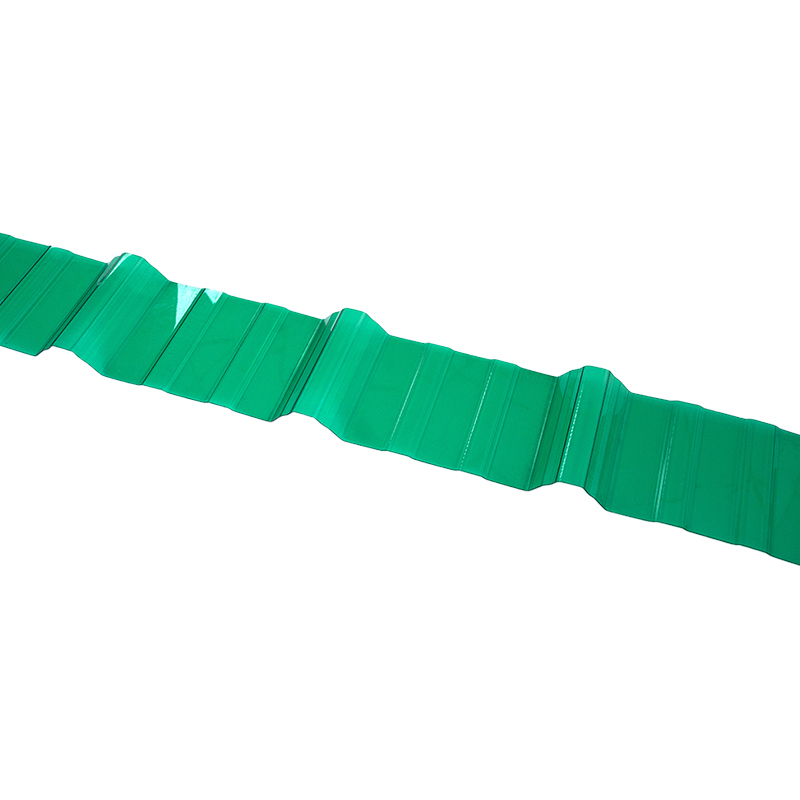
For commercial and residential skylight installations alike, these properties translate into lower lifetime costs: less structural support, faster installation, and fewer replacement cycles compared to glass. Explore our range of solid polycarbonate sheets engineered specifically for overhead glazing applications.
Solid Polycarbonate in Greenhouses: Light That Plants Love
Plant growth is driven by photosynthetically active radiation (PAR)—the wavelength band between 400 nm and 700 nm that chlorophyll absorbs most efficiently. The ideal greenhouse glazing maximizes transmission within this band while managing heat, protecting against UV damage to both plants and structure, and withstanding the mechanical stresses of an outdoor enclosure.
Solid polycarbonate transmits light evenly across the visible spectrum, including the full PAR range. Unlike some tinted or diffusing materials, clear solid polycarbonate does not filter out wavelengths that are critical to photosynthesis. Plants grown under solid polycarbonate glazing receive light conditions closely approximating direct outdoor exposure—an important factor for high-value horticultural crops and year-round production.
The material's resistance to agricultural chemicals is a further practical advantage. Greenhouse environments involve regular application of pesticides, fertilizers, and disinfectants. Solid polycarbonate demonstrates good resistance to dilute acids, alkalis, and most common agricultural sprays, maintaining surface integrity without clouding or pitting over time.
Weather performance is equally critical in greenhouse construction. Solid polycarbonate withstands hail impact, high winds, and heavy snow loads that would crack or collapse glass panels—reducing the risk of catastrophic crop loss from storm damage. Its flexibility also allows gentle curving for arched or lean-to greenhouse structures, enabling design options that rigid glass cannot accommodate.
Key Specs to Look for When Choosing Solid Polycarbonate Sheets
Not all solid polycarbonate sheets are equivalent. Selecting the right specification for a skylight or greenhouse project requires attention to the following parameters:
- Thickness: For skylights, 4mm to 6mm is typical for residential applications; commercial or high-load environments may require 8mm to 12mm. For greenhouse side walls, 3mm to 4mm is generally sufficient; roof panels benefit from 4mm to 6mm.
- UV protection specification: Confirm that the sheet carries a co-extruded UV coating—not a surface-applied film—on the weather-facing side. Co-extruded coatings are molecularly bonded and cannot peel or delaminate.
- Light transmittance rating: Look for panels rated at 88% to 90% light transmittance for clear variants. Any rating below 85% in a nominally clear panel suggests the use of recycled or lower-grade resin.
- Impact resistance standard: Panels intended for overhead glazing should meet or exceed IK10 impact rating (20-joule impact resistance), confirming suitability for hail and windborne debris scenarios.
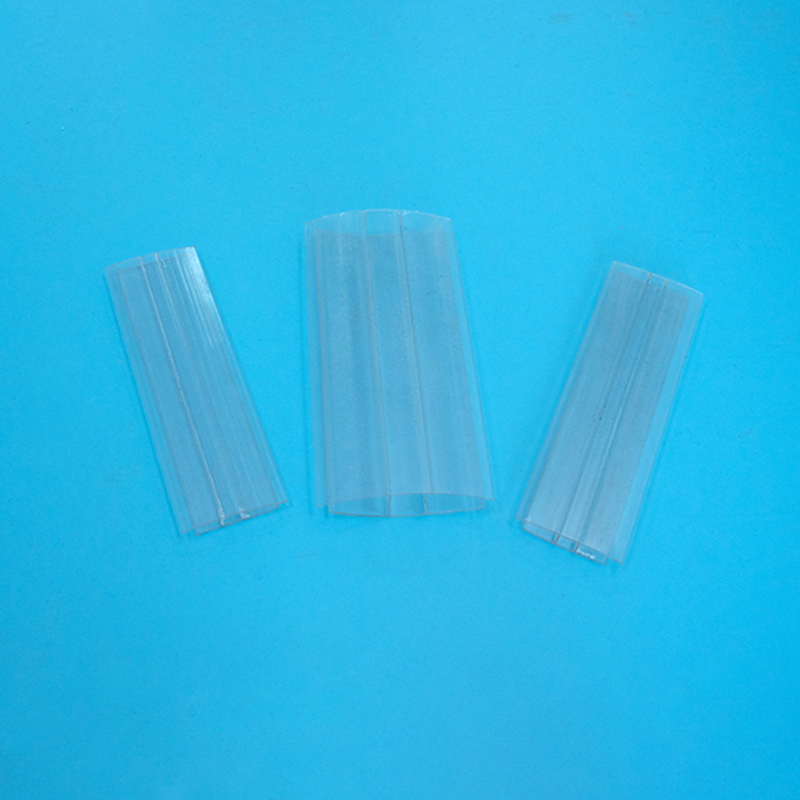
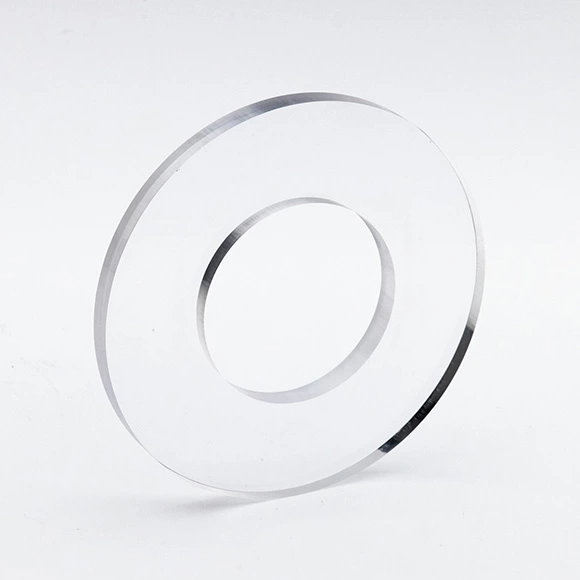
- Custom dimensions and processing: For projects requiring non-standard sizes, curved profiles, or pre-drilled fixing holes, choose a supplier offering polycarbonate sheets processed to specification—this eliminates on-site waste and ensures dimensional accuracy.
Solid vs. Multiwall: Which Is Right for Your Project?
Buyers frequently compare solid and multiwall polycarbonate sheets. Both are polycarbonate; the difference lies in structure, and that structure determines which application each serves best.
| Property | Solid Polycarbonate | Multiwall Polycarbonate |
|---|---|---|
| Light transmittance | Up to 90% (glass-like clarity) | 70–82% (light diffusion) |
| Thermal insulation | Moderate | Superior (trapped air layers) |
| Impact resistance | Very high | High |
| Weight | Light | Lighter (hollow structure) |
| Best for | Skylights, security glazing, display windows | Greenhouse roofs, conservatories, canopies |
| Optical quality | Crystal clear, undistorted | Diffused, softened light |
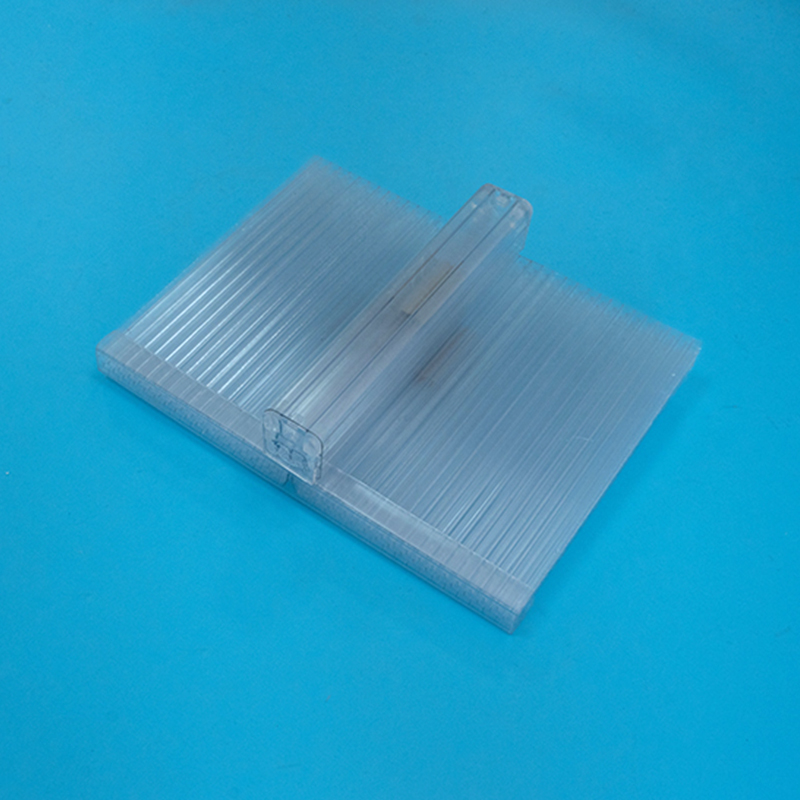
When maximum optical clarity and impact protection are the priority—as in architectural skylights, overhead walkways, or glazed facades—solid polycarbonate is the correct choice. When thermal insulation and light diffusion matter more than visual clarity—as in greenhouse roofing where even light distribution benefits crops—polycarbonate hollow sheets offer a compelling alternative. Many projects use both: solid panels for vertical glazing and feature skylights, multiwall panels for roof coverage where insulation performance drives the specification.
Understanding this distinction allows buyers to optimize both performance and cost across a single project, selecting the right material for each part of the structure rather than applying a one-size-fits-all solution.