English
 Español


Provide you with the latest enterprise and industry news.
Content
Best Tools for Cutting Corrugated Polycarbonate
The most effective tool for cutting corrugated polycarbonate sheets is a circular saw with a fine-toothed blade (60-80 teeth), which delivers clean, straight cuts without cracking. For smaller projects, a jigsaw or utility knife works well, while power shears are ideal for curves. The key is matching the tool to your project scale and cut complexity.
| Tool | Best For | Blade Type | Cut Quality |
|---|---|---|---|
| Circular Saw | Long, straight cuts | 60-80 teeth carbide | Excellent |
| Jigsaw | Curves and detailed cuts | Fine-tooth metal blade | Good |
| Utility Knife | Thin sheets, manual cuts | Sharp replacement blade | Fair |
| Power Shears | Complex shapes | Metal shear blades | Very Good |
Avoid using abrasive cutting wheels or high-speed tools that generate excessive heat, as temperatures above 240°F (115°C) can melt and deform polycarbonate edges.
Step-by-Step Cutting Process
Preparation and Marking
Proper preparation prevents costly mistakes and ensures professional results. Always measure twice and cut once, especially when working with expensive corrugated polycarbonate roofing panels.
- Clean the sheet surface with a soft cloth to remove dust and debris that could scratch the material during cutting
- Leave the protective film on both sides during cutting to prevent scratches and reduce chipping
- Use a permanent marker or grease pencil to mark cutting lines directly on the protective film
- Support the entire sheet on a flat, stable surface with scrap wood underneath to prevent sagging
- Clamp the sheet securely, placing clamps every 2-3 feet along the cutting line to minimize vibration
Executing the Cut
The cutting technique varies slightly depending on whether you're cutting across or along the corrugations. Cutting perpendicular to the corrugations is easiest and produces the cleanest edges.
- Set your circular saw blade depth to 1/8 inch deeper than the sheet thickness to ensure complete cuts without excessive blade exposure
- Start the saw at full speed before making contact with the material to prevent chipping at the entry point
- Feed the saw slowly and steadily at approximately 3-4 inches per second to avoid melting from friction heat
- Apply gentle downward pressure, letting the blade do the work rather than forcing the cut
- Have an assistant support the off-cut piece to prevent it from falling and cracking as the cut completes
For utility knife cutting on sheets under 0.08 inches (2mm) thick, score the line multiple times with increasing pressure, then snap the sheet along the score line over a straight edge.
Preventing Common Cutting Problems
Avoiding Cracks and Chips
Polycarbonate can crack if cut improperly, especially in cold weather when the material becomes more brittle. Studies show that cutting at temperatures below 50°F (10°C) increases crack risk by over 60%.
- Never cut polycarbonate sheets in freezing conditions; store materials indoors for 24 hours before cutting if possible
- Use sharp blades exclusively, as dull blades create friction, heat, and jagged edges that propagate cracks
- Maintain consistent cutting speed to prevent localized heat buildup that weakens the material
- Ensure adequate support within 6 inches of the cut line to prevent flexing that causes stress cracks
Managing Edge Melting
Friction-generated heat is the primary cause of melted edges. A blade moving too slowly through the material or a dull blade creates excessive friction. The solution is counterintuitive: increase cutting speed slightly while reducing feed pressure.
If melting occurs, allow the material to cool for 2-3 minutes before handling. Melted edges can be cleaned up with fine sandpaper or a deburring tool once cooled.
Working With Corrugations
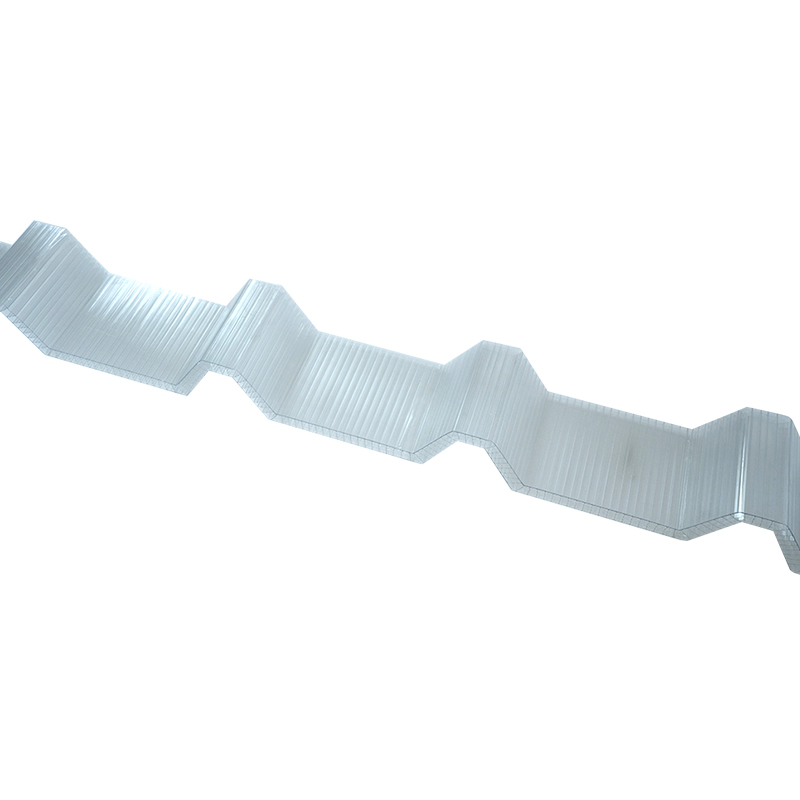
The wave pattern in corrugated polycarbonate creates unique challenges. When cutting perpendicular to the corrugations (across the waves), the cut is straightforward. However, cutting parallel to the corrugations requires extra attention to maintain straight lines.
For parallel cuts, use a straightedge guide clamped to the sheet. Position the guide so the saw's base plate rides against it, compensating for the uneven surface created by the corrugations. Some professionals prefer to cut through the valley (low point) of the corrugation rather than the peak, as this provides more stable saw contact.
When trimming sheets to fit specific rafter spacing, always measure from the same reference edge and account for the corrugation pattern. Standard corrugated polycarbonate has wave peaks spaced at 3-inch intervals, so plan cuts to align with the structural pattern when possible.
Safety Precautions and Protective Equipment
Cutting polycarbonate generates fine plastic dust and sharp fragments that pose health and safety risks. Proper protection is non-negotiable.
- Wear ANSI Z87.1-rated safety glasses with side shields to protect against flying chips and dust
- Use an N95 or better respirator mask, as polycarbonate dust can irritate respiratory passages
- Wear work gloves when handling sheets, but remove gloves when operating power tools to prevent entanglement
- Work in a well-ventilated area or outdoors, as cutting generates odors from heated plastic
- Keep a fire extinguisher nearby when using power tools, though polycarbonate is inherently flame-resistant
Secure loose clothing and tie back long hair. The rotating blade can catch fabric or hair with devastating consequences. According to OSHA data, improper clothing accounts for 12% of power tool accidents.
Post-Cutting Edge Finishing
Raw cut edges require finishing to prevent moisture infiltration and ensure longevity. Exposed corrugation channels act as water conduits if left unsealed.
Deburring and Smoothing
Use 220-grit sandpaper to lightly smooth any rough edges left by the cutting process. Sand in one direction along the cut edge rather than back-and-forth to avoid creating new scratches. A deburring tool or sharp utility knife can remove larger imperfections.
Sealing Channel Ends
For roofing applications, seal the top (ridge) end of corrugations with aluminum tape or specialized polycarbonate end closure strips. The bottom (eave) end should remain open to allow condensation drainage. This prevents water pooling inside the channels that can lead to algae growth and material degradation.
Remove the protective film within 30 days of cutting to prevent UV degradation from making it difficult to peel off later.
Cutting Different Thicknesses and Profiles
Corrugated polycarbonate is available in various thicknesses and corrugation profiles, each requiring slight technique adjustments.
| Thickness | Recommended Tool | Blade Speed | Special Considerations |
|---|---|---|---|
| 0.03-0.06 in | Utility knife or shears | N/A | Score and snap method works well |
| 0.06-0.12 in | Jigsaw or circular saw | Medium | Most common thickness, standard approach |
| 0.12+ in | Circular saw | Lower speed, higher torque | Requires slower feed rate to prevent melting |
For greca or trapezoid profiles with larger corrugations, the cutting process remains the same, but support becomes more critical due to the increased depth of the waves. Position support boards to contact the sheet at multiple wave peaks to prevent flexing during the cut.
Cost-Saving Tips for Large Projects
When cutting multiple sheets for roofing or greenhouse projects, efficiency and material conservation become important factors.
- Create a cutting diagram before starting to minimize waste, especially when working with standard 8-foot, 10-foot, or 12-foot sheet lengths
- Invest in a quality carbide blade that can cut 200-300 linear feet before dulling, rather than replacing cheaper blades every 50 feet
- Set up a dedicated cutting station with proper support to speed workflow and maintain consistent quality
- Consider renting professional tools for large one-time projects rather than purchasing equipment you'll rarely use
- Save offcuts longer than 2 feet for future small projects, patches, or repairs
Professional roofing contractors report that proper planning and efficient cutting can reduce material waste from 15% down to 5% on typical residential projects, representing significant cost savings on larger installations.