English
 Español


Provide you with the latest enterprise and industry news.
Content
- 1 What Makes Clear Solid Polycarbonate Sheet the Superior Glazing Choice
- 2 Key Physical and Optical Properties
- 3 Common Applications and Industry Usage
- 4 Available Thicknesses and Standard Sheet Sizes
- 5 Fabrication and Installation Considerations
- 6 Surface Treatments and Protective Coatings
- 7 Chemical Resistance and Compatibility
- 8 Cost Analysis and Selection Criteria
- 9 Maintenance and Longevity Expectations
What Makes Clear Solid Polycarbonate Sheet the Superior Glazing Choice
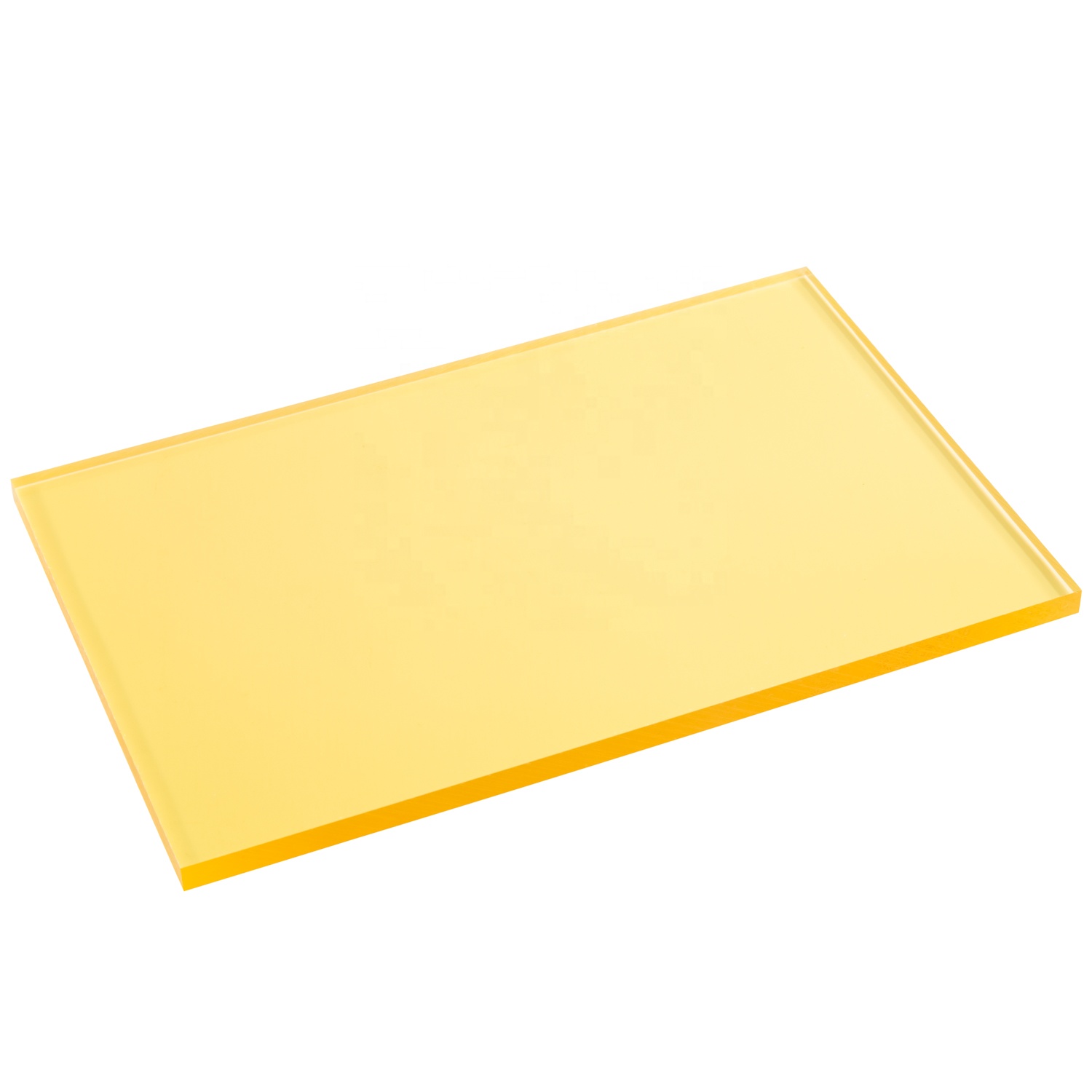
Clear solid polycarbonate sheet is a transparent thermoplastic material that offers 250 times the impact resistance of glass while maintaining up to 90% light transmission. Unlike multiwall or corrugated variants, solid polycarbonate consists of a single homogeneous layer, delivering superior optical clarity and structural strength for applications ranging from machine guards to architectural glazing.
The material's unique combination of clarity, durability, and workability has made it the preferred alternative to glass and acrylic in environments requiring high impact resistance. With a tensile strength of approximately 9,000 PSI and service temperatures ranging from -40°F to 250°F, solid polycarbonate performs reliably across diverse industrial and commercial settings.
Key Physical and Optical Properties
Impact Resistance and Structural Performance
The most distinguishing characteristic of clear solid polycarbonate sheet is its exceptional impact strength. Standard grades achieve Izod impact values of 12-16 ft-lb/in, making them virtually unbreakable under normal conditions. This performance explains why polycarbonate is specified for:
- Security glazing in banks and correctional facilities
- Machine guarding where OSHA compliance requires impact protection
- Sports facility barriers and protective screens
- Hurricane and storm protection panels
Light Transmission and Optical Clarity
Clear solid polycarbonate maintains light transmission rates between 86-90% depending on thickness and surface treatment. While slightly lower than glass (92%), this difference is negligible in most applications. The material's refractive index of 1.586 provides excellent optical clarity without the distortion common in lower-grade plastics.
For UV-sensitive applications, manufacturers offer sheets with both sides coated with UV-protective layers that block 99.9% of harmful UV radiation while maintaining transparency. This coating extends outdoor service life from 3-5 years (uncoated) to 10-15 years or more.
| Property | Clear Polycarbonate | Glass | Acrylic |
|---|---|---|---|
| Impact Strength | 250x glass | Baseline | 17x glass |
| Light Transmission | 86-90% | 92% | 92% |
| Weight (vs glass) | 50% lighter | - | 43% lighter |
| Service Temp Range | -40°F to 250°F | -40°F to 400°F | -40°F to 180°F |
Common Applications and Industry Usage
Industrial and Manufacturing Environments
Manufacturing facilities utilize solid polycarbonate for machine guarding applications that require compliance with ANSI Z87.1 and OSHA standards. The material's ability to withstand repeated impacts without shattering makes it ideal for protecting operators from flying debris while maintaining visibility of the work process.
Typical industrial applications include:
- CNC machine enclosures and access doors
- Robotic work cell barriers
- Conveyor system guards
- Inspection windows in clean rooms
Architectural and Construction Projects
Architects specify clear solid polycarbonate for applications where safety glazing is required by building codes, particularly in areas prone to vandalism or extreme weather. The material's light weight (approximately 7 lb/ft² for 1/4" thickness) reduces structural load requirements compared to equivalent glass installations.
Common architectural uses include skylights, canopies, bus shelters, security windows, and interior partitions where impact resistance exceeds standard safety glass requirements. In coastal regions, 3/8" to 1/2" thick sheets meet hurricane impact codes when properly installed.
Transportation and Automotive Applications
The transportation sector relies on solid polycarbonate for windshields in golf carts, ATVs, and recreational vehicles. Marine applications include boat windshields and hatch covers where the material's resistance to saltwater corrosion and impact from waves provides superior performance over glass.
Available Thicknesses and Standard Sheet Sizes
Clear solid polycarbonate sheet is manufactured in thicknesses ranging from 0.060" (1.5mm) to 1.5" (38mm), with the most common thicknesses being 1/8", 3/16", 1/4", and 3/8". Thicker gauges offer increased rigidity and spanning capability but at higher material costs.
Standard sheet sizes include:
- 48" × 96" (4' × 8') - most common stock size
- 60" × 96" (5' × 8') - available for larger panels
- 48" × 120" (4' × 10') - for reduced seaming
- Custom sizes available through cut-to-size services
When selecting thickness, consider the unsupported span and expected loads. For glazing applications, 1/4" thickness typically supports spans up to 36" at standard wind loads, while 3/8" can extend to 48" spans under similar conditions.
Fabrication and Installation Considerations
Cutting and Machining Techniques
Solid polycarbonate can be fabricated using standard woodworking and metalworking tools. For best results:
- Circular saws: Use fine-tooth carbide blades (10-14 teeth per inch) at moderate speeds to prevent chipping
- Drilling: Standard twist drills work well; drill from both sides on thick sheets to prevent exit cracking
- Routing: Sharp carbide bits at 10,000-15,000 RPM produce clean edges
- Laser cutting: CO2 lasers provide precision cuts but create sealed edges that may yellow over time
Always leave the protective masking film in place during fabrication to prevent surface scratches, removing it only after installation.
Thermal Expansion and Mounting Requirements
Polycarbonate has a coefficient of thermal expansion approximately 6 times greater than glass, requiring special mounting considerations. For a 4' × 8' sheet, expect expansion/contraction of approximately 1/4" across the length over a 100°F temperature range.
Critical installation guidelines include:
- Drill oversized holes (1/16" larger than fastener diameter) to allow movement
- Use neoprene or EPDM washers to prevent stress cracking at fastener points
- Leave 1/8" clearance per linear foot when edge-mounting in frames
- Avoid rigid adhesives; use flexible sealants compatible with polycarbonate
Cold Forming and Bending Capabilities
Solid polycarbonate can be cold-formed to curves without heat application. The minimum cold-bend radius is approximately 150 times the sheet thickness (e.g., 1/4" sheet = 37.5" radius). Tighter radii require thermoforming at temperatures between 280-340°F using specialized equipment.
Surface Treatments and Protective Coatings
Abrasion-Resistant Hard Coating
Standard polycarbonate is relatively soft (Rockwell M70) and susceptible to scratching. Hard-coated versions increase surface hardness to approximately 3H pencil hardness, providing scratch resistance comparable to glass. This coating is essential for applications involving frequent cleaning or exposure to abrasive materials.
Hard coating adds 15-25% to material costs but significantly extends service life in high-traffic or outdoor environments. Most manufacturers apply coatings to both sides, though single-side options are available for cost-sensitive applications.
UV Protection and Anti-Fog Treatments
UV-stabilized sheets incorporate additives that absorb ultraviolet radiation, preventing the yellowing and embrittlement that would otherwise occur within 1-2 years of outdoor exposure. Co-extruded UV protection on both surfaces is standard for outdoor applications, guaranteeing 10+ years of service with less than 5% yellowing.
Anti-fog coatings are available for applications where condensation would impair visibility, such as greenhouse glazing or refrigerated display cases. These hydrophilic coatings cause water to sheet rather than bead, maintaining optical clarity in humid conditions.
Chemical Resistance and Compatibility
Polycarbonate exhibits excellent resistance to dilute acids, oils, greases, and most aqueous solutions, making it suitable for industrial environments. However, the material is vulnerable to certain chemicals that can cause crazing, stress cracking, or dissolution.
Incompatible substances include:
- Aromatic hydrocarbons (benzene, toluene)
- Chlorinated solvents (methylene chloride, chloroform)
- Strong alkaline solutions (above pH 12)
- Ammonia-based cleaners (use isopropyl alcohol instead)
For cleaning, manufacturers recommend mild soap solutions or specialized polycarbonate cleaners. Avoid abrasive materials like paper towels; use microfiber cloths to prevent scratching.
Cost Analysis and Selection Criteria
Clear solid polycarbonate typically costs $3-8 per square foot for standard grades, depending on thickness and surface treatments. Premium options with hard coating and UV protection can reach $10-15 per square foot. While more expensive than acrylic ($2-4/sq ft), the superior impact resistance justifies the premium in safety-critical applications.
When evaluating materials for a specific application, consider:
- Impact requirements: Choose polycarbonate where safety codes mandate or where breakage could cause injury or downtime
- Optical clarity priority: Acrylic offers slightly better clarity if impact resistance is not critical
- Service environment: Outdoor applications require UV-protected grades; harsh chemical environments may necessitate glass
- Maintenance expectations: Hard coating reduces long-term maintenance costs in high-traffic areas
| Thickness | Standard Grade | UV Protected | Hard Coat + UV |
|---|---|---|---|
| 1/8" | $3.00-4.00/sq ft | $4.50-5.50/sq ft | $6.50-8.00/sq ft |
| 1/4" | $5.00-6.50/sq ft | $7.00-9.00/sq ft | $10.00-12.00/sq ft |
| 3/8" | $7.00-9.00/sq ft | $10.00-12.00/sq ft | $13.00-15.00/sq ft |
Maintenance and Longevity Expectations
Properly installed and maintained clear solid polycarbonate delivers 15-20 years of service life in outdoor applications when UV-protected coatings are applied. Indoor installations can last indefinitely with minimal degradation if protected from incompatible chemicals and excessive heat.
Maintenance requirements are minimal but critical for preserving optical clarity:
- Clean with soft cloths and approved cleaners every 3-6 months
- Inspect mounting hardware annually for stress cracks at fastener locations
- Replace degraded sealants to prevent moisture infiltration at edges
- Monitor for yellowing in outdoor installations as an indicator of UV coating failure
Surface scratches can be polished out using specialized polycarbonate polishing compounds, though deep scratches may require professional restoration or panel replacement.